Abstract
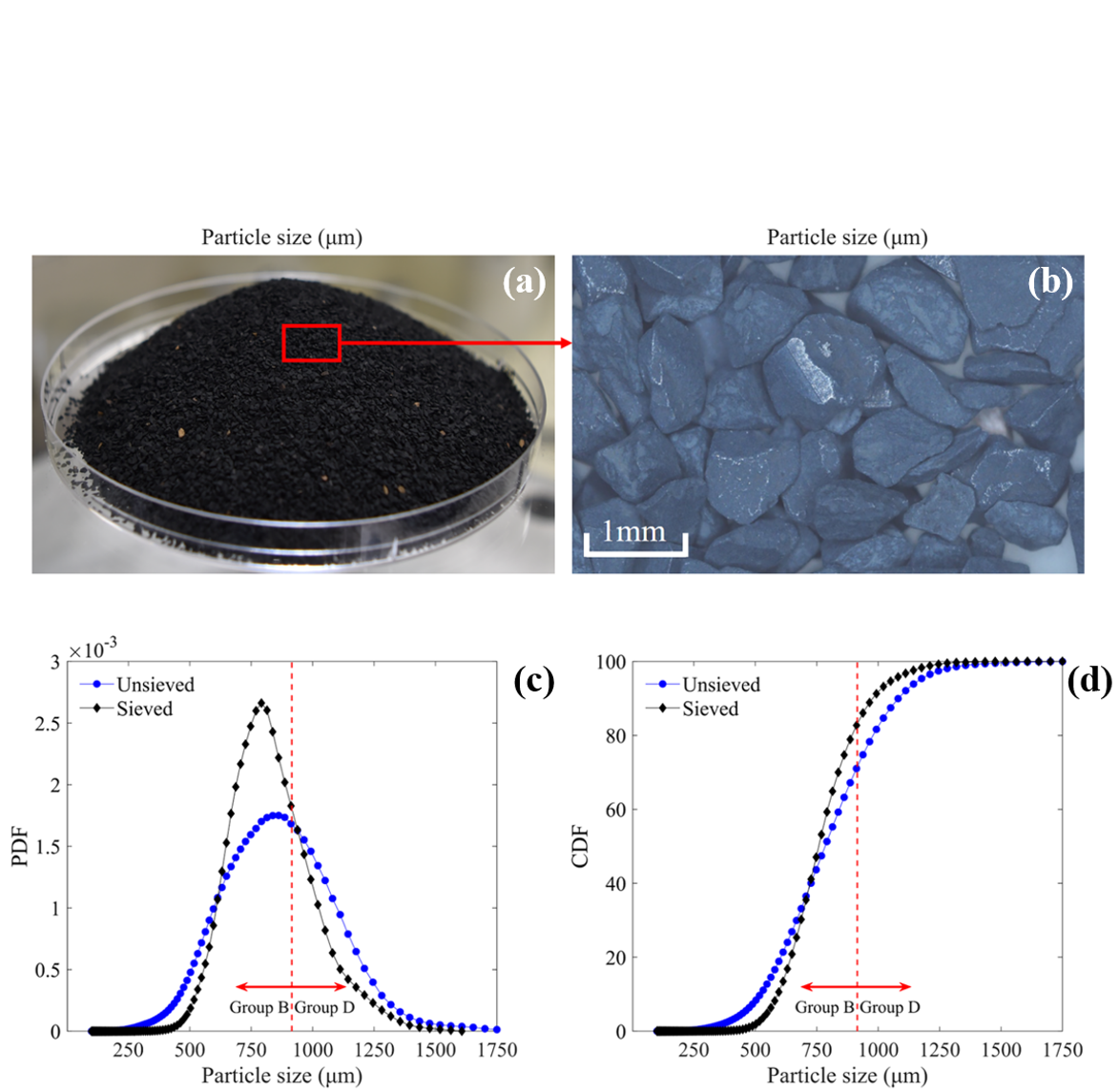
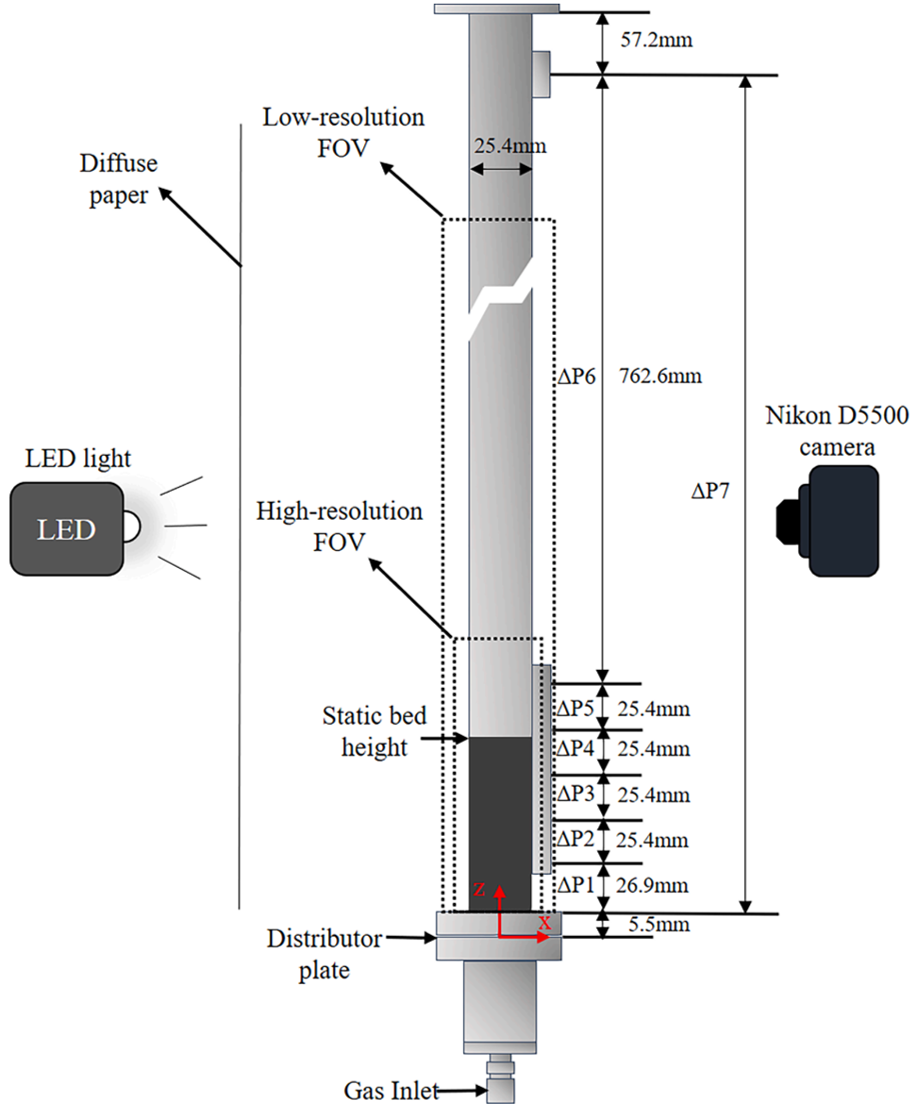
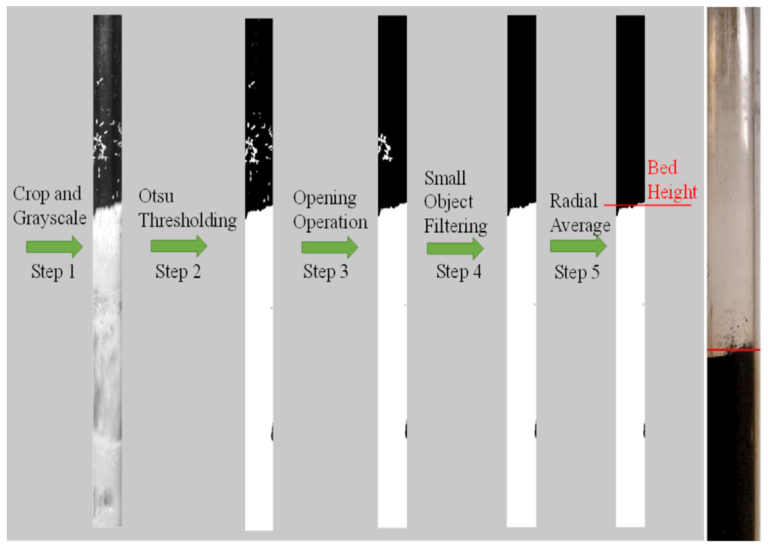
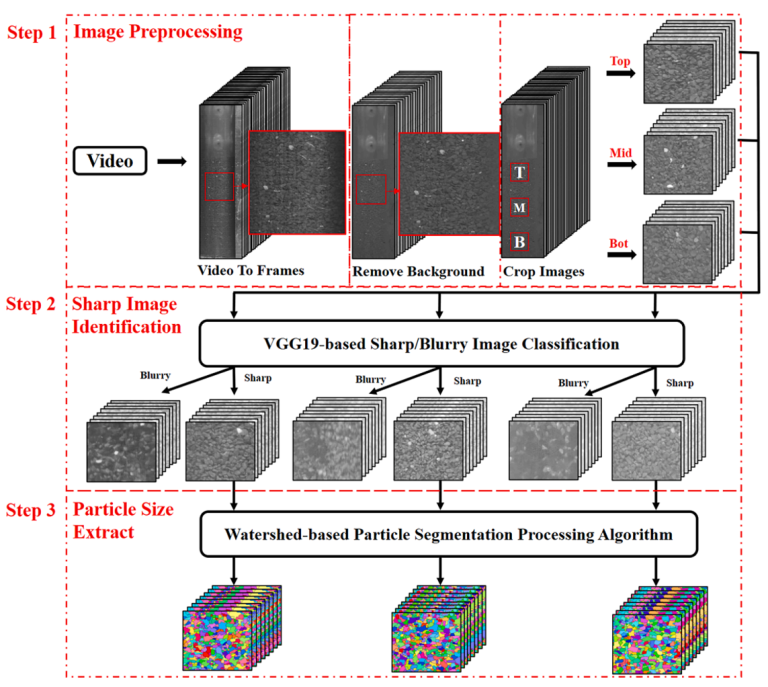
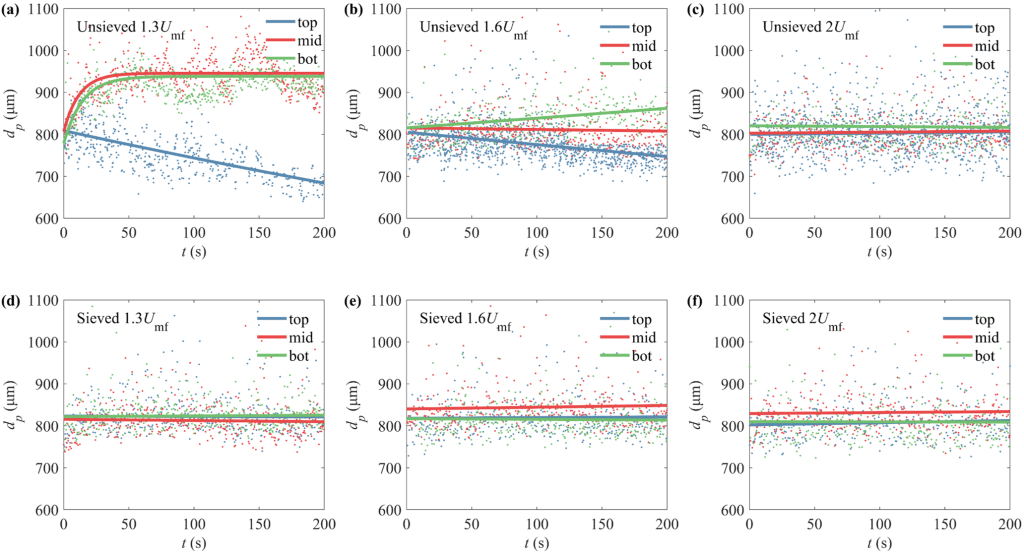
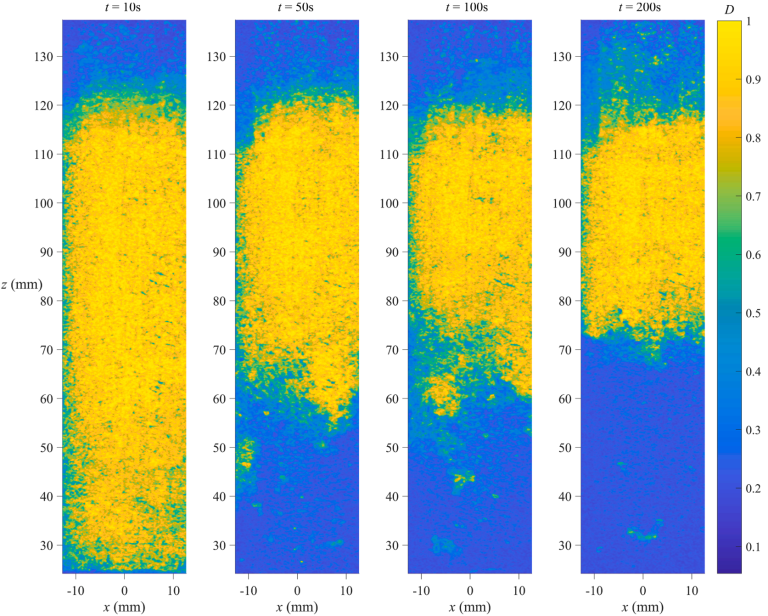
The present paper summarizes comprehensive in situ measurements of the temporal segregation/mixing behavior of the non-spherical Geldart B and D E-CAT particles mixture in a bubbling fluidized bed. The experiments are performed for both unsieved and sieved E-CAT particles with varying particle size distribution width and at the fluidization velocity ranging from 1.3 to 5Umf. The high-speed pressure and image data were used to provide time-resolved quantification of dynamic expanded bed height and pressure drop during the experiment. In parallel, a hybrid machine learning-aided image processing algorithm has been developed for quantifying the instantaneous particle size distribution at varying axial locations. Results reveal that the segregation exists only at low fluidization velocities (1.3 and 1.6Umf) for unsieved cases with a wider size distribution. In contrast, particles with a narrower distribution exhibited well-mixed behavior for the full range of tested gas velocities. The segregation intensity and spatial extent were found to correlate with particle size distribution width and fluidization velocity, respectively. In addition, by analyzing pressure, expanded bed height, particle size and motion, and bubble characteristics, we provided a comprehensive multi-scale dynamic view of the segregation process. This in-depth understanding of the process, coupled with the time-resolved datasets obtained, can be instrumental for benchmarking numerical models in solid–gas multiphase flows and for optimizing the design of fluidized beds.