Drop impact on Cultural Relics

Background

The use of stone as a medium for artistic expression has ranged from the construction of ancient buildings to small-scale statues. The decay of culturally artifacts means a loss of history. In our common understanding, biological colonization is usually associated with the deterioration of buildings and aesthetic damage. 

However, more and more researchers believe that biological colonization can protect buildings from weathering. Subaerial biofilms are microbial communities that develop on solid mineral surfaces exposed to the atmosphere. The microorganisms can induce modifications on and within the substrate. 

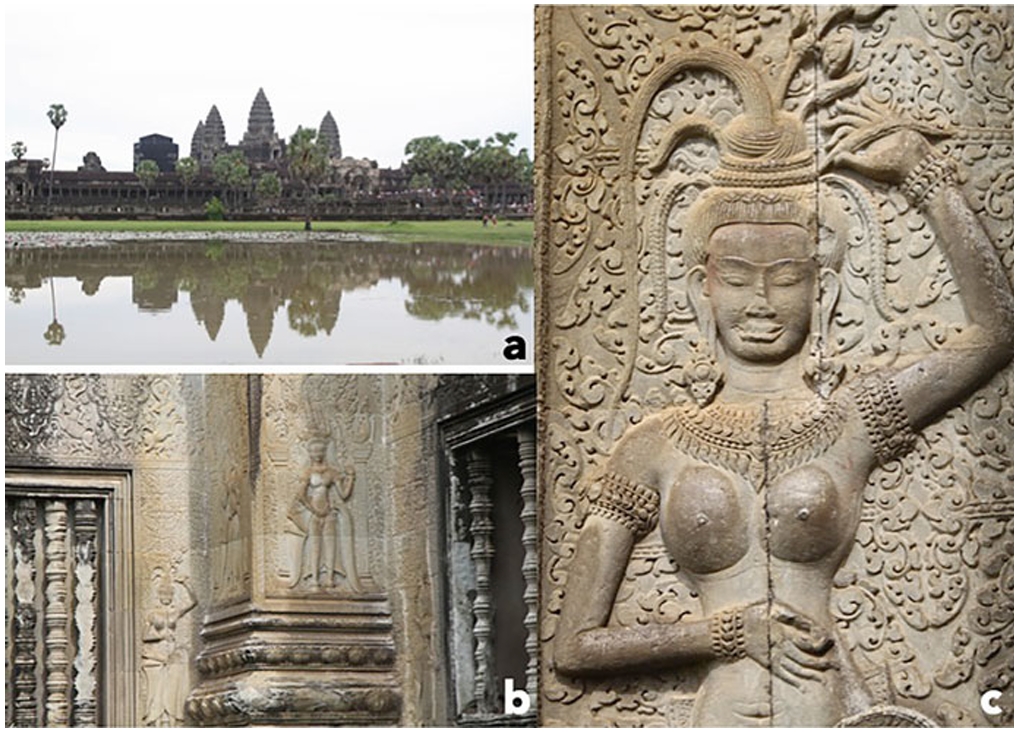
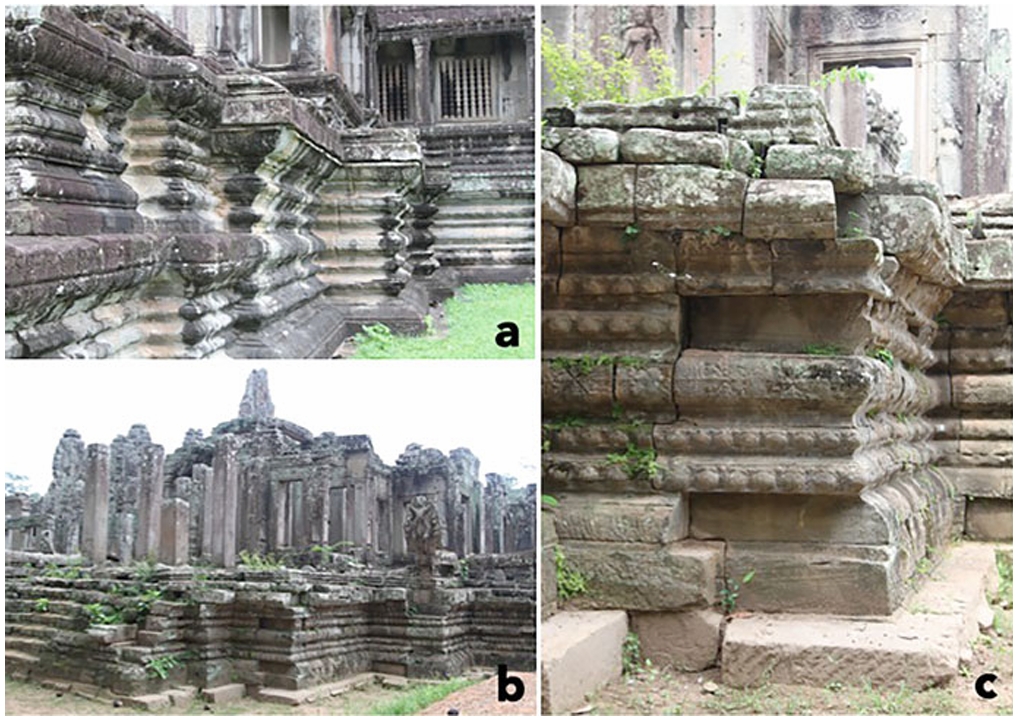
Fig. 1. Photographs of the UNESCO World Cultural Heritage Angkor Wat in Cambodia: Left, a distance view of the central tower with surrounding ones; Right, photographs of the sandstone foundation and its current conditions. Gu, J. D., & Katayama, Y. (2021) 

Interdisciplinary Research

Studying the impact of water droplets on stones is a critical step in understanding the role of water on building surfaces and its subsequent fate, since water plays important roles in many physical and chemical deterioration mechanisms. This study addresses a narrow facet, focuing on examining how biofilms affect the substrate during the physical processes of droplet impact, spreading, and absorption on a porous stone.  

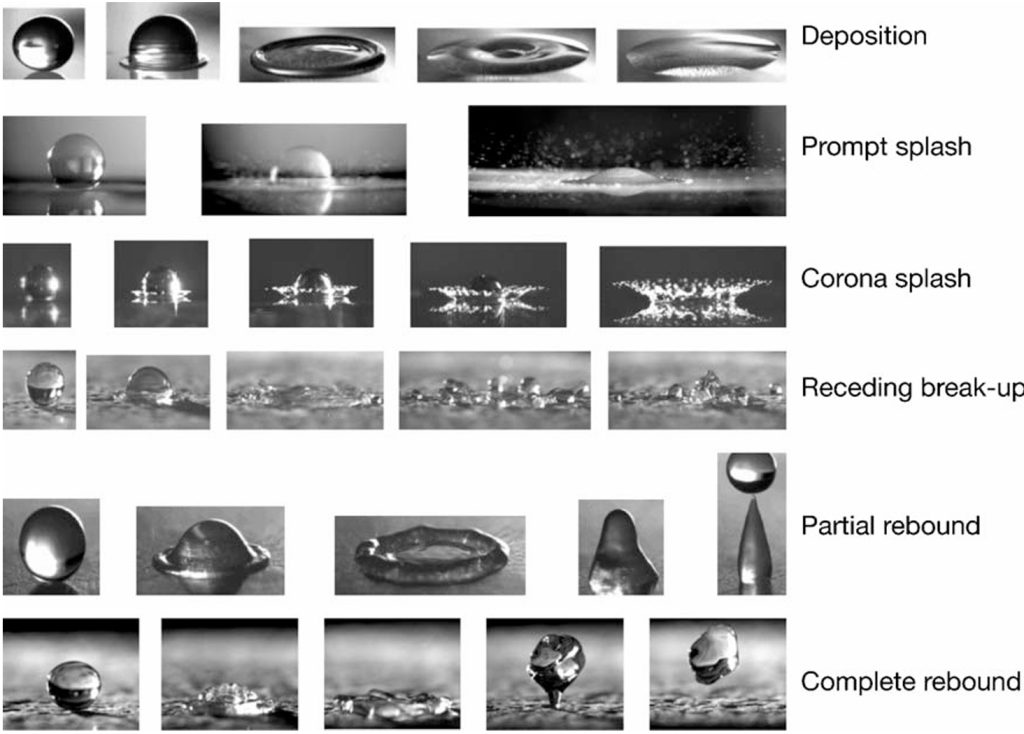
Fig. 2. Six possible outcomes of drop impact on a dry wall. Rioboo et al (2001)

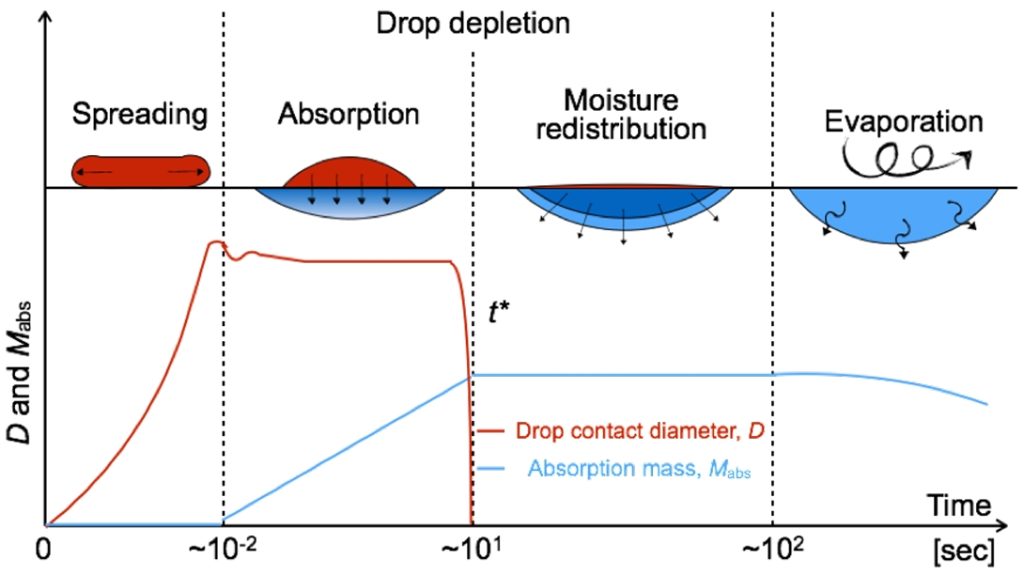
Fig. 3. Fate of impinging droplet on porous media. When a droplet hits a porous medium, it first spreads over the surface and is absorbed through capillary action, accompanied by evaporation. Lee, J. B (2015)

Experiments

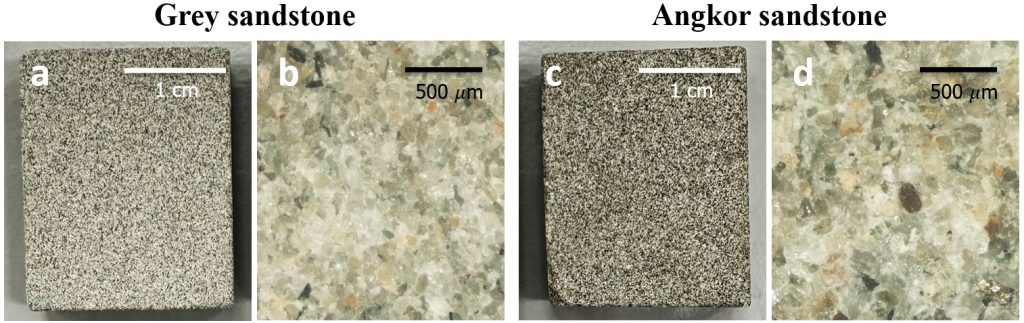
Substrate: There are two types of stone we worked with: Construction grey sandstone, which were quarried in Chongqing, China and Angkor sandstone, which  were collected from Kulen Mountain, the quarry that also supplied stone for the monuments of the Angkor Empire. Both of them are mainly composed of quartz, anorthite, and calcite. 


Fig. 4. Macroscopic and microscope images of Construction grey sandstone and Angkor sandstone.

Surface condition: Sandstone was inoculated with microorganisms or coated with organic layer to observe the change in surface morphology and wetting behaviors.

Imapct test: Water droplet impact with different velocity on flat uniform stone surface.

Video. 1. Water drop impact dynamics on the (a) non-treated, (b) agar-coated, (c) low concentration biofilm, (d) high concentration biofilm.