Background
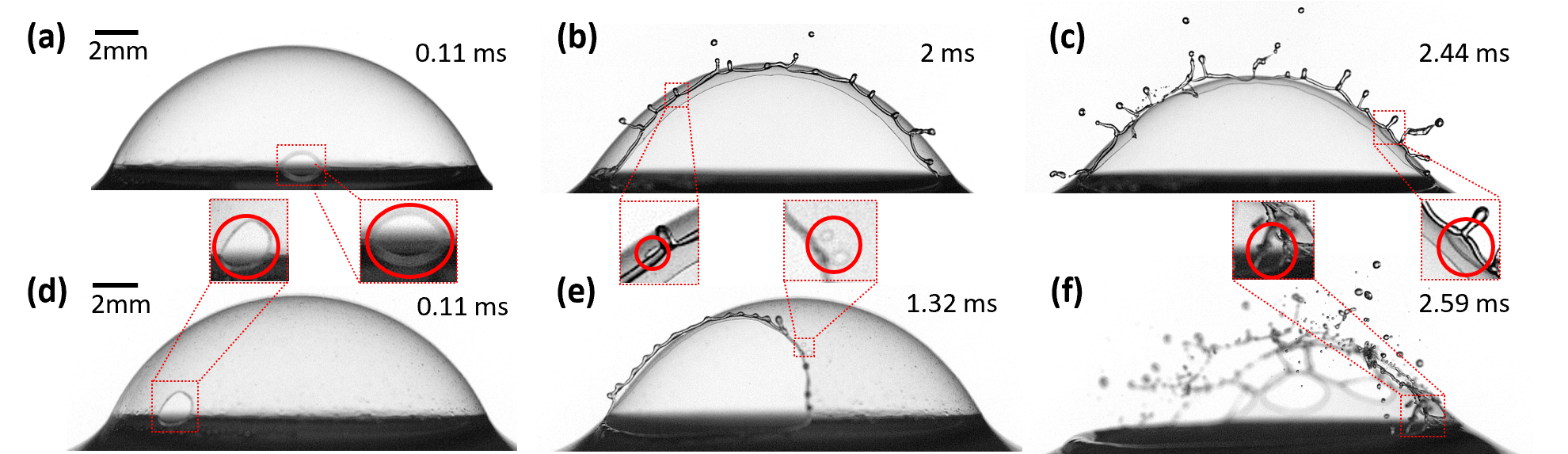
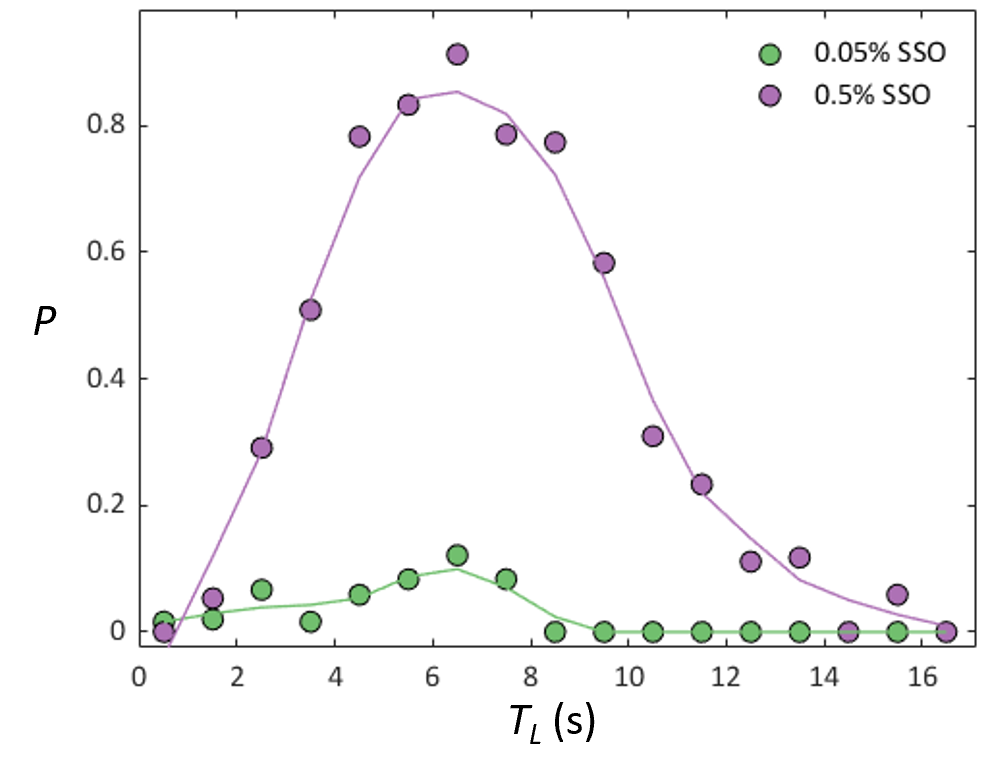
Bursting bubbles at contaminated air–water interfaces can aerosolize oil, microplastics, and microbes, but predicting the resulting drop yield requires linking bubble lifetime (TL) to bursting dynamics. In dilute oil-in-water emulsions, the cap film thins during drainage and ultimately bursts; while hole expansion remains Taylor–Culick-like, lifetime controls the film thickness at bursting and the bursting topology. We show that lifetimes within an intermediate window promote a transition from single-hole to multihole bursting, where near-simultaneous perforations increase active rim length, intensify rim–rim interactions, and substantially boost film-drop production (Nd).