Title: Escape Dynamics: Beyond Classical Settings
Speaker: Samuel and Anne Tolkowsky Chair Prof. Oleg Gendelman, Faculty of Mechanical Engineering, Technion, Israel
Host: Assoc. Prof. Youhua Jiang, MER, GTIIT
Location and Time: E510, North Campus, May 28, Thursday, 13:00 – 14:30 (China Time), 8:00 – 9:30 (Israel Time)
Zoom Link: https://gtiit.zoom.us/j/96709312677
Zoom Meeting Code: 967 0931 2677
Abstract
Escape from a potential well due to an external excitation is a classical problem, relevant in many branches of physics, chemistry and engineering. Classical approach, known since early 40s, considers the escape under effect of white noise and is widely applied in the theory of chemical reactions. Current presentation addresses the opposite case form the viewpoint of the excitation spectrum – the escape from a potential well under narrow-band forcing. The setting itself is ubiquitous and exhibits certain typical quantitative features known for a long time. However, only recently a mathematical approach capable to cope with transient character of the process and strong nonlinearity and to predict/explain these typical features has been devised. One reveals a profound resonant underlying mechanism of the efficient (or most dangerous) escape. Appropriate reduced-order models allow predicting the dependence of the escape threshold on the forcing frequency, as well as the safe basins in the space of initial conditions. Increase of the dimensionality leads to substantial complications in the escape dynamics. Even for simple energy-preserving 2DOF models, one reveals a plethora of possible resonant and non-resonant escape mechanisms. For some of these mechanisms, it is also possible to develop the efficient reduced – order models allowing deep exploration of the escape patterns.
Biography
Born in Kharkov, Ukraine in 1969. Received the MSc degree in applied mathematics and physics from Moscow Institute of Physics and Technology in 1992, PhD (1995) and Doctor of Sciences (2000) degrees in mathematical and physical sciences – in the Institute of Chemical Physics in Moscow. Since 2003 with Faculty of Mechanical Engineering, Technion – Israel Institute of Technology in Haifa. Currently – chaired professor. Authored more than 250 scientific papers and multiple monographs, presented numerous plenary and invited talks at major scientific conferences in the field and at professional courses.
Title: Coupling Effects of Impeller Geometry and Cannula Positioning on the Hydrodynamic Characteristics of an Impeller-Inspired Miniature Axial Pump
Speaker: Haoyang Lu (Master Student in MER)
Supervisor: Prof. Prof.Andrea CIONCOLINI
Date and Time: Wednesday, May 27, 2026, 16:00 (China) or 11:00 (Israel)
Abstract:
Percutaneous Ventricular Assist Devices (PVADs) represent a crucial, life-saving therapeutic modality for end-stage heart failure and high-risk cardiac interventions. However, systematic investigations into the internal fluid dynamics of their core component (the miniature axial pump) remain scarce, particularly regarding the complex coupling between intrinsic geometric features and operational parameters (flow rate and pressure head) that remains largely unexplored. To address this critical gap, this study developed a bespoke miniature axial-flow pump featuring a novel movable cannula configuration, utilizing the Impella architecture as an engineering baseline. The primary objective is to establish a comprehensive analytical framework bridging “parametric design, experimental characterization, and mechanistic analysis,” thereby providing a robust theoretical and empirical foundation for the refined optimization of next-generation PVADs.
Nine distinct impeller configurations, varying in blade number (Z: 2, 3, 4) and twist angles (θ: 0°, 45°, 90), were developed via 3D parametric modeling and fabricated using high-resolution 3D printing technology. A high-fidelity hydraulic test loop was constructed, integrating precision instrumentation (a high-accuracy flowmeter, differential pressure transducers, and a Pico data acquisition system). Systematic parametric sweep experiments were conducted to evaluate pump performance across a matrix of cannula insertion depths (λ: 20%–60%) and rotational speed (n: 6000–12000 rpm). Pump work capacity was quantified using effective hydraulic power, and classical turbomachinery similarity principles were applied to non-dimensionalize the experimental data, successfully isolating intrinsic hydrodynamic behaviors from speed-dependent variations.
The experimental results reveal that the insertion depth exerts a profound, non-monotonic influence on macroscopic hydraulic performance. The optimal insertion depth (λopt) is highly coupled with impeller geometry: configurations with fewer blades achieve optimal performance in the range of 40% to 50% for λ, whereas high-blade-count designs shift toward the range of 50% to 60% for λ. Dimensionless analysis identifies the twist angle as the dominant geometric determinant; specifically, reducing the twist angle significantly amplifies the head coefficient. Furthermore, the influence of blade number is strongly modulated by the twist angle, diminishing rapidly as the twist angle increases. Crucially, the study identifies a phenomenon of “design equifinality”, wherein distinct geometric mechanisms yield near-identical dimensionless performance profiles, exemplified by the remarkable alignment between the two-bladed straight (0°) impeller and the four-bladed 45°-twist impeller.
Based on these derived hydrodynamic scaling laws, a comprehensive engineering design strategy is proposed: to maximize absolute hydraulic output, the combination of a 3-blade, 0°-twist impeller positioned at a 40% insertion depth is optimal. If biological or manufacturing constraints necessitate geometric compromises, introducing a moderate twist angle can be effectively mitigated by finely tuning the cannula insertion depth. The parameter-performance database and dimensionless characteristic curves established in this study can serve as valuable references for subsequent structural design and mechanistic investigations of PVADs.
Title: A Design and Optimization Methodology for Generating Graded Lattice Structures with Complex Geometric Constraints
Speaker: Wen Hu (Master Student in MER)
Supervisor: Prof. Zhujiang Wang
Date and Time: Wednesday, May 27, 2026, 15:00 (China)
Abstract:
Graded lattice structures (GLSs) are increasingly used in personalized medical devices due to their high design freedom and superior mechanical properties. However, designing and optimizing these structures to adapt to complex, patient-specific geometries and precise mechanical targets remains an unresolved challenge. This bottleneck significantly limits the large-scale clinical application of GLSs.
To address this limitation, this study presents an automated design and optimization framework for flexible GLSs based on PIMesh, an automatic point cloud generation method. By using an adaptive point cloud that accurately captures the target geometry, lattice structures are constructed via a centroidal dual method. Additionally, a decoupled, two-stage mechanical optimization strategy—inspired by bi-directional evolutionary structural optimization—is introduced to sequentially optimize node distance and bar size. Stage I reconstructs the global coarse topology by adjusting the target node distance, while Stage II counteracts stochastic perturbations from the PIMesh reconstruction by fine-tuning the bar sizes. The primary advantages of this method are its ability to construct complex-shaped GLSs without boundary trimming and its precise control over both global and local mechanical properties. The framework was successfully applied to replicate the mechanical properties of 2D graded lattice materials and to design a 3D-printed diabetic foot ulcer offloading midsole. Numerical results confirm the feasibility and efficacy of the proposed design and optimization methodology.
Title: Fluid Dynamic Analysis on Centrifugal Blood Pumps
Speaker: Jincheng Fang(Master Student in MER)
Supervisor: Prof. Damiano Padovani
Date and Time: Tuesday, May 26, 2026, 16:00 (China) or 11:00 (Israel)
Abstract:
Cardiovascular diseases, especially heart failure, have become a serious threat to human health. Ventricular assist devices provide an important therapeutic option, and centrifugal blood pumps are their core components. The hydraulic performance and internal flow characteristics of these pumps are therefore critical for device optimization.
This seminar presents a unified research framework for evaluating centrifugal blood pumps through hydraulic experiments, particle image velocimetry measurements, and computational fluid dynamics simulations. Based on a consistent pump model, different rotor configurations were tested and compared under identical conditions.
The experimental results show that straight-blade rotors generally provide better hydraulic performance than streamlined-blade rotors within the investigated operating range. Among the tested configurations, the six-blade straight rotor demonstrates the best overall performance. CFD results further indicate that streamlined blades can generate a more uniform velocity distribution and smoother velocity gradients, suggesting a potentially gentler internal flow environment.
Overall, this study provides an integrated approach for rotor screening, performance evaluation, and design optimization of centrifugal blood pumps, offering useful guidance for future research on ventricular assist devices and artificial heart systems.
Title: Data-driven control of thermoacoustic instabilities
Speaker: Dr. Bo Yin (Hong Kong University of Science and Technology, HK)
Host: Vikrant Gupta
Time and Location: Saturday, 23 May, 2026, 10:45 am (Beijing time), E503, North Campus
Language: English
Abstract: Thermoacoustic instabilities pose a significant barrier to sustainable hydrogen combustion systems. To address this, Genetic Programming (GP) closed-loop control is demonstrated as a model-free, data-driven strategy to suppress self-excited oscillations across progressively complex systems. Initially, the GP framework is validated in a laminar Rijke tube, achieving suppression via asynchronous quenching by exploiting the preferred mode of the open flame. Next, limit-cycle oscillations in a Sondhauss tube are suppressed via synchronous quenching (SQ) without resonant amplification. In a turbulent combustor, SQ disrupts flame-acoustic coupling by inhibiting large-scale coherent vortex roll-up. The framework is then extended to quasiperiodic and mixed-mode oscillations, where dual-mode SQ is achieved and hybrid control-law switching expands the stable operating envelope. Finally, in an axially staged combustor, instabilities are mitigated by simultaneously disrupting flame-acoustic feedback and flame-flame synchrony, driving the system to a new stable basin of attraction. Across all configurations, GP control consistently outperforms conventional methods, achieving superior amplitude reductions with minimal actuation power. These findings offer a new strategy for suppressing combustion instabilities in operational propulsion systems.
Biography: Bo Yin received his PhD in Mechanical Engineering from the Hong Kong University of Science and Technology (HKUST) in 2023, under the supervision of Prof. Larry Li, and subsequently continued as a postdoctoral researcher at HKUST. His research has focused on data-driven control strategies, including genetic programming and cluster-based control, applied to thermoacoustic systems such as flame-driven Rijke tubes and electrically driven Sondhauss tubes. During his postdoctoral work, he visited the Norwegian University of Science and Technology (NTNU), where he worked with Prof. Nicholas Worth to extend these control approaches to turbulent hydrogen-enriched combustors, including both main-stage and staged configurations.
Title: Cluster-based control of thermoacoustic instability in sustainable combustion systems
Speaker: Prof. Larry Li (Hong Kong University of Science and Technology, HK)
Host: Vikrant Gupta
Time and Location: Saturday, 23 May, 2026, 10:00 am (Beijing time), E503, North Campus
Language: English
Abstract : As combustion systems transition toward hydrogen-enriched and other low-carbon fuels, maintaining stable operation becomes increasingly challenging. One particularly damaging phenomenon is thermoacoustic instability, in which acoustic pressure waves couple with unsteady heat release to produce strong self-sustained flow oscillations. These oscillations can limit combustor performance, reduce operational flexibility, and cause hardware failure.
In this seminar, I will discuss a data-driven feedback control strategy called cluster-based control (CBC) for suppressing thermoacoustic instabilities in a turbulent lean-premixed combustor with a hydrogen-enriched flame. The method uses a single pressure sensor to construct a two-dimensional delay-embedded representation of the combustor dynamics. This feature space is divided into clusters, and an optimized actuation amplitude is assigned to each cluster using a Nelder-Mead simplex algorithm. The resulting controller is low-dimensional, interpretable, and experimentally efficient.
In fewer than 100 optimization iterations, or roughly one hour of experimental time, CBC reduces the thermoacoustic amplitude by 83%, outperforming brute-force open-loop mapping and achieving performance comparable to or better than several machine-learning-based controllers. Phase-space analysis reveals that CBC steers the combustor dynamics toward low-amplitude regions, while spectral and Rayleigh index analyses indicate that suppression occurs by breaking the phase synchronization between pressure and heat-release-rate fluctuations. This work shows that CBC can provide rapid, effective, and physically interpretable suppression of thermoacoustic instabilities, offering a promising route toward real-time feedback control of sustainable combustion systems.
Biography: Dr. Larry Li is an Associate Professor in the Department of Mechanical and Aerospace Engineering at the Hong Kong University of Science and Technology (HKUST). He received his BASc and MASc in Mechanical Engineering from the University of British Columbia (Canada), where he was a Natural Sciences and Engineering Research Council Scholar in the Applied Fluid Mechanics Laboratory. He then completed his PhD at the University of Cambridge as a Bill & Melinda Gates Scholar. After receiving his PhD, he remained at Cambridge as a Research Associate before joining HKUST in 2014. His research focuses on fluid mechanics, thermoacoustics, and nonlinear dynamics, with applications ranging from aircraft propulsion to spray painting. His work has examined a wide range of thermofluid phenomena, including global instabilities in open shear flows, non-Newtonian atomization in crossflows, and forced/mutual synchronization of thermoacoustic modes.
Title: Experiments on the dynamics of highly flexible slender structures subjected to fluid flow
Speaker: Prof. Jorge Francisco Silva Leon, Facultad de Ingeniería en Mecanica y Ciencias de la Produccion, Escuela Superior Politecnica del Litoral, ESPOL, Guayaquil, 090902, Ecuador
Venue: E2-408, South CampusZoom Link: https://cedia.zoom.us/j/4359982097
Abstract
In this presentation, I will talk about my research on fluid-structure interactions. Specifically, I look at how flexible structures behave when they are exposed to airflow. To understand the fundamental physics, different experimental models (highly flexible silicone filaments, slender plates) were tested in a wind tunnel. Data analysis techniques employed, comprising both linear and non-linear time-series methods, will be covered in this talk. Finally, I will explain how these fundamental findings connect to real-world applications.
Title: Settling of finite-size slightly negative buoyant particles under plunging breaking waves
Speaker: Xuan Liu (Master Student in MER)
Supervisor: Prof. Cheng Li
Date and Time: Friday, May 8, 2026, 15:00 (China) or 10:00 (Israel)
Abstract:
Vertical transport of microplastics is strongly influenced by highly transient, energetic surface breaking waves. In this study, we experimentally investigate the settling dynamics of millimeter-scale slightly negative buoyant spherical particles entrained by a laboratory plunging breaker. Particle Image Velocimetry (PIV) is used to characterize the spatiotemporal evolution of the breaker-generated turbulence, while Particle Tracking Velocimetry (PTV) resolves the particle trajectories and settling response. The measurements reveal a non-stationary flow environment where the turbulent dissipation rate attenuates by several orders of magnitude over time, causing the non-dimensional groups such as settling number to evolve dynamically. Across the post-breaking interval, the mean settling response remains strongly suppressed, with measured settling velocities only approximately 28–42% of the corresponding quiescent values. The suppression is particle-size dependent: smaller particles exhibit broader and more non-Gaussian velocity distributions, stronger early-time retardation, and a more persistent response to the combined action of turbulent fluctuations and coherent sloshing. Concentration measurements further show that the cloud evolves from an initially well-mixed intrusion to a progressively weakened, broadened, and downward-shifted structure. Comparison with a recent finite-size settling model developed for homogeneous isotropic turbulence reproduces the qualitative recovery trend as turbulence decays, but systematically overpredicts the settling response. These results show that turbulence-based parameterization alone is insufficient for breaking-wave flows and that coherent sloshing introduces an additional suppression of net downward transport. The measurements provide a physically grounded basis for incorporating breaking-induced settling retardation into predictive models of microplastic transport.
Title: Experimental Investigation of Particle Segregation in Fluidized Beds and Development of Wind and Particle Measurement Systems for Wind Energy and Cloud Physics Research
Speaker: Biaosheng Luo (Master Student in MER)
Supervisor: Prof. Pinhas Bar-Yoseph (Technion), Prof. Cheng Li (GTIIT)
Date and Time: Thursday, January 15, 2026, 17:00 (China) or 11:00 (Israel)
Abstract:
This thesis consists of two main parts. In the first part, we aim to investigate the segregation and mixing behavior of non-spherical Geldart B and D E-CAT particle mixtures in a bubbling fluidized bed. The experiments will focus on both unsieved and sieved E-CAT particles, with varying particle size distributions and fluidization velocities ranging from 1.3 to 5Umf. High-speed pressure and image data will be utilized to quantify the dynamic behavior of the bed, including the expanded bed height and pressure drop. Additionally, we will develop a hybrid machine learning-aided image processing algorithm for quantifying the instantaneous particle size distribution at different axial positions. The goal is to explore how segregation behavior correlates with particle size distribution and fluidization velocity and to gain a deeper understanding of the underlying processes, which will aid in the optimization of fluidized bed design and numerical model validation.
In the second part, we propose a novel UAV-based platform for real-time measurement of wind and particle distributions within the atmospheric boundary layer. The system will integrate a full-scale sonic anemometer with a multi-resolution digital in-line holography (MRDIH) system to capture three-dimensional wind vectors and particle size distributions, ranging from micrometer-scale aerosols to millimeter-sized particles. Time-domain and frequency-domain correction methods will be employed to mitigate rotor-induced disturbances and ensure accurate wind measurements. This platform will provide valuable insights into wind–particle interactions, including droplet dynamics in clouds and turbulence-driven particle dispersion, with applications in wind energy assessment, air-quality monitoring, and research in multiphase flow dynamics.
Title: Heterogeneous combustion in Chemically Reacting Fixed-beds: Enabling Clean Energy Technologies
Speaker: Dr. Andrés Arriagada Romero
Time: January 15, Thursday, 16:00 – 17:00 (China Time), 10:00 – 11:00 (Israel Time)
Abstract
Hybrid/Inert porous media reactors have been studied for syngas production/thermal purposes under oxidation regimes, where heterogeneous processes are complex due to the multiphase phenomena involved in the thermal decomposition of carbonaceous materials. This seminar will explore porous media combustion at both experimental and numerical levels, from fundamentals to advanced modeling techniques for industrial applications. Experiments performed from vertical tubular filtration combustion reactors to solar-driven gasification devices will be presented. On the other hand, carbon char gasification using both particle/macro-pore-resolved and porous media models (PMM) in 3D/2D chemically reacting fixed-bed (CRFB) configuration for non-porous char will be analyzed. The effect of chemical kinetics, variable porosity, tortuosity, effective diffusivity, dispersion, and thermal conductivity will be further discussed. Finally, the role of heterogeneous combustion in CRFBs is highlighted as a key enabler for clean energy technologies, where porous media combustion can be extended to fuel-flexible systems involving coal, ammonia, and hydrogen co-combustion, which opens new opportunities for low-NOX operation, enhanced efficiency, and renewable hydrogen generation.
 Title: Closed-Loop Motion Control Combining Magnetic Actuation and Visual Feedback
Speaker: Shuwan Chen (Master Student in MER)
Supervisor: Prof. Damiano Padovani (GTIIT), and Prof. Pinhas Bar Yoseph (Technion)
Date and Location: E503, North Campus, Thursday, January 8, 2026, 16:00 (China) or 10:00 (Israel)
Title: Influence of subaerial biofilms on water droplet impact dynamics and wetting processes of sandstone
Speaker: Hongtao Qian (Master Student in MER)
Supervisor: Prof. Ji-Dong Gu (GTIIT), Prof. Cheng Li (GTIIT), and Prof. Alex Furman (Technion)
Date and time: Tuesday, Dec. 16, 2025, 19:00 (China) or 13:00 (Israel)
Zoom: https://gtiit.zoom.us/j/98394180547
Abstract
The biological protection effects of biofilms and lichens on stone heritage buildings are gaining increasing attention. Water plays a crucial role in this process. It not only participates in numerous physical and chemical weathering processes but is also a key factor driving biological degradation. Studying the impact behavior of droplets on porous stones is a critical step in understanding the role of water on building surfaces and its subsequent fate, as well as evaluating the moisture retention capacity of the substrate. The goal of this study is to characterize the entire physical process of droplet impact on porous sandstone, with a primary focus on the influence of subaerial biofilms (SABs) and organic layers on liquid spreading behavior and mass transport in porous stone. For this, we used commercially available grey sandstone and Angkor sandstone, both artificially covered with biofilms and agar layers as experimental objects. High-speed and machine-vision cameras were used to capture the droplet spreading and absorption processes under different conditions. Microscopic observations were employed to observe surface morphology changes and characterize the 3D structure of the biofilms. We found that droplets on the sandstone did not retract after impact. Once the maximum spreading diameter was reached, the contact line was pinned and remained constant. SABs and organic layers significantly inhibited droplet spreading, shifting the original wetting behavior toward non-wetting: the maximum spreading diameter decreased, the decay of spreading speed accelerated, and the dynamic contact angle increased. The thickness of the biofilm directly determined the strength of the hydrophobic effect. In addition, SABs and organic layers significantly prolonged the time required for complete absorption of the droplet. The large-scale filling and coverage by microorganisms and gels made it more difficult for the liquid to penetrate the sandstone, raising the threshold for liquid infiltration. Since capillary absorption mainly occurs over longer time scales after the maximum spreading, droplet impact speed affects spreading but does not influence the absorption process. At higher impact velocities, as the contribution of inertia to the post-impact surface energy becomes stronger, the differences induced by surface structure in spreading behavior becomes relatively smaller. However, the drainage effect of the biofilm during the absorption process remains evident.
 Topic: Experimental and numerical investigation of primary breakup dynamics in Close-Coupled Gas Atomization (CCGA)
Supervisors: Assoc. Prof. Bo Kong (GTIIT) and Prof. René van Hout (Technion)
Speaker: Tiansong Cheng (PhD Student in MER)
Date and Locations: E503, North Campus, December 4, 2025, at 16:00 (China time), 10:00 (Israel time)
Zoom link: https://gtiit.zoom.us/j/94193727156?pwd=Kigs7nKpnrSsnMDei2szfEYMZdaRW8.1
Topic: Search and Rescue (SAR) Robot
Supervisors: Assoc Prof. Damiano Padovani (GTIIT) and Prof. Amir Gat (Technion)
Speaker: Jintian Wu (Master student in MER)
Date and Locations: September 25, 2025, at 20:00 (China time), 15:00 (Israel time)
Zoom link: https://gtiit.zoom.us/j/95197607780
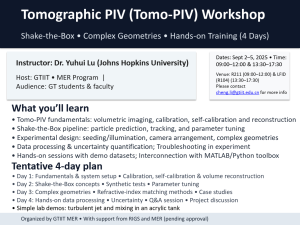 Title: Tomographic PIV (Tomo-PIV) Workshop
Host: MER, GTIIT
Time and Location: Tuesday – Friday, September 2-5, 2025, North Campus
Time | Location |
R211, NC | 9:00 – 12:00 |
R104, NC | 13:30 – 17:30 |
For detailed arrangement, please kindly check the poster below. If you would like to know more information, please kindly contact Prof. Cheng Li.
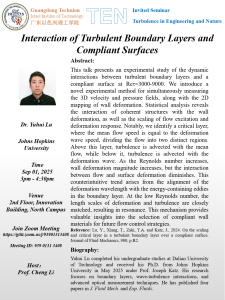 Title: Interaction of Turbulent Boundary Layers and Compliant Surfaces
Speaker: Dr. Yuhui Lu (Johns Hopkins University)
Host: Prof. Cheng Li (MER, GTIIT)
Time and Location: Monday, September 1, 2025, 15:00 – 16:30 (Beijing time), 2nd Floor, Innovation Building, North Campus
Zoom Meeting: https://gtiit.zoom.us/j/93901313408
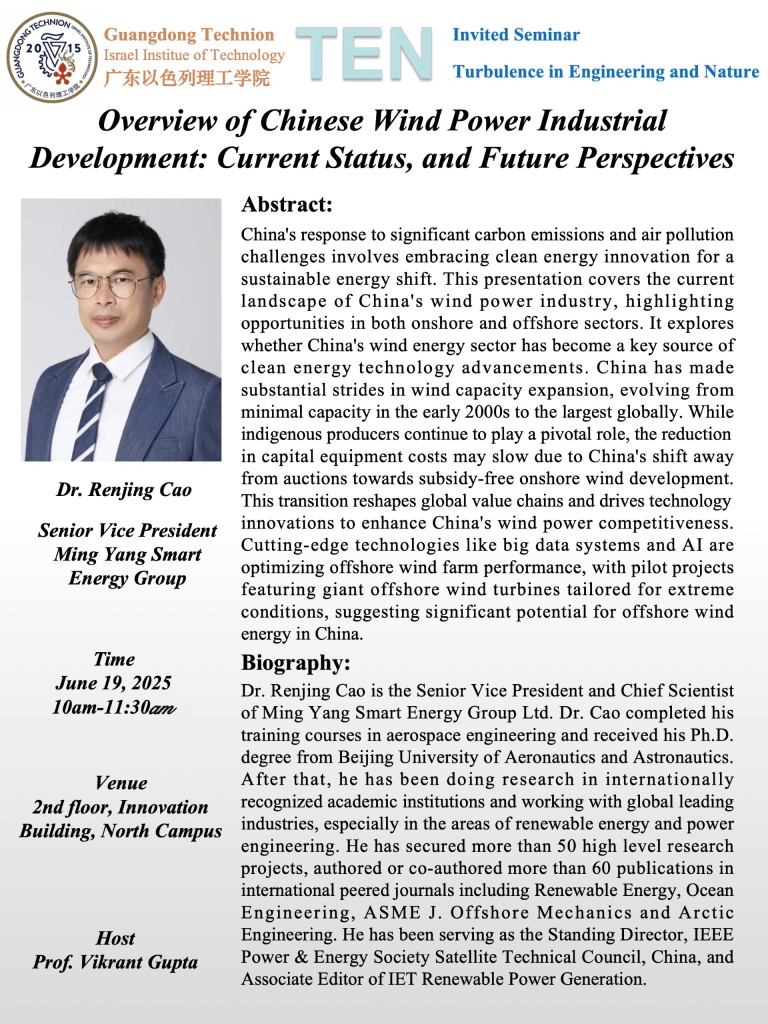
Title: Overview of Chinese Wind Power Industrial Development: Current Status, and Future Perspectives
Speaker: Dr. Renjing Cao (Ming Yang Smart Energy Group)
Host: Prof. Vikrant Gupta (MER, GTIIT)
Time: 10:00 am -11:30 am, Beijing Time
Location: 2nd Floor, Innovation Building, North Campus, GTIIT
Title: Development and Application of a UAV Platform for Atmospheric Turbulent Boundary Layer Measurement with a Full-Scale Ultrasonic Anemometer
Speaker: Yixun Liu (MSc student in MER)
Supervisor: Prof. Cheng Li (GTIIT) and Prof. Minping Wan (SUSTech)
Time: Thursday, May 8, 2025, 15:00-15:30 (Beijing Time)
Location: E403, Education Building, North Campus
Zoom Meeting: https://gtiit.zoom.us/j/9630844007?omn=95034152140
Abstract
Wind measurement forms the basis of atmospheric boundary layer research and is critical for meteorological process prediction, ecological protection, and wind resource utilization. Traditional measurement methods face challenges in simultaneously achieving high spatiotemporal resolution, low cost, and dynamic observation capabilities. This study comprehensively evaluates the feasibility of the Unmanned Aerial Vehicle Measurement System (UAVMS) for atmospheric turbulent boundary layer measurements through theoretical analysis, laboratory experiments, and field measurements, while investigating rotor-induced turbulence interference effects. We developed a multi-rotor UAVMS and conducted qualitative and quantitative analyses of factors affecting measurement accuracy. Based on outdoor validation experiments, three rotor-wake correction algorithms were proposed, including a frequency-domain correction model based on the Fast Fourier Transform that reduced horizontal wind speed errors to within 5% while producing corrected data exhibiting the characteristic slope of -5/3 in turbulent inertial subrange power spectrum analysis. Field measurements confirmed the system’s capability to accurately measure wind profiles and resolve multi-scale turbulent structures through spectral analysis. Further investigation of rotor-wake mitigation involved large-scale particle image velocimetry experiments testing various deflector configurations, demonstrating that structural optimization through deflector installation can effectively improve measurement precision. The developed UAVMS represents an innovative solution for three-dimensional atmospheric boundary layer wind measurements, offering cost-effective, high-precision, and flexible operational capabilities that advance boundary layer observation methodologies and provide practical applications for wind energy and environmental monitoring.
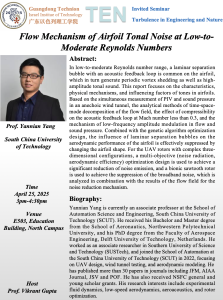
Title: Flow Mechanism of Airfoil Tonal Noise at Low-to-Moderate Reynolds Numbers
Speaker: Prof. Yannian Yang (South China University of Technology)
Host: Prof. Vikrant Gupta (MER, GTIIT)
Time: 15:00-16:30, Beijing Time
Location: E503, Education Building, North Campus, GTIIT
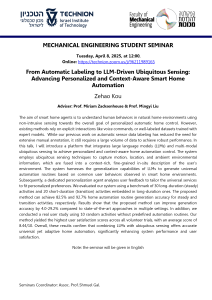
Title: From Automatic Labeling to LLM-Driven Ubiquitous Sensing: Advancing Personalized and Context-Aware Smart Home Automation
Speaker: Zehao Kou (MSc Student in MER)
Supervisors: Prof. Mingyi Liu (GTIIT) and Prof. Miriam Zacksenhouse (Technion)
Time: Tuesday, April 8, 2024, 17:00 (China time) or 12:00 (Israel time)
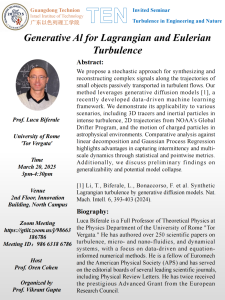
Title: Generative AI for Lagrangian and Eulerian Turbulence
Speaker: Prof. Luca Biferale (University of Rome ‘Tor Vergata’)
Host: Prof. Oren Cohen (Physics, GTIIT)
Time: 15:00-16:30, Beijing Time
Location: 2nd Floor, Innovation Building, North Campus, GTIIT