
Surface chemistry of solid catalysts
Title
Surface chemistry of solid catalysts
Speaker
Prof. Weixin Huang (黄伟新) (University of Science and Technology of China (中国科学技术大学))
Host
Prof. Kai Huang (GTIIT, Chemistry)
Time and Location
Apr. 25 2022, Monday, 10:00am-11:00am(China Time), E310 (Education Building, 3rd floor)
Language
English
Abstract
Surface chemistry of solid catalysts lays the foundation of heterogeneous catalysis, and surface chemistry studies of model catalysts with well-defined structures are an effective approach to fundamentally understand complex heterogeneous catalysis. Oxide single crystals and single crystal thin films are traditional oxide model catalysts, whose surface chemistry and catalysis are studied under UHV conditions greatly deviating from the conditions of working catalysts. Uniform oxide nanocrystals with well-defined structures are an emerging novel type of model catalysts that can be studied under the same conditions as working catalysts [1,2]. In this talk, I will present our work on using uniform Cu2O cubes enclosed with the {100} facets, octahedral enclosed with the {111} facets and rhombic dodecahedra enclosed with the {110} facets to explore structure-activity relations of Cu2O and ZnO/Cu catalysts in CO oxidation, WGS, CO hydrogenation and propylene epoxidation with O2 reactions [3-10]. Our results demonstrate that uniform oxide nanocrystals can not only serve as model catalysts extending the surface structure-surface chemistry relation acquired from single crystal model catalysts to the surface structure-surface chemistry-catalysis relation but also as candidates for efficient catalysts.
References
[1] W. Huang, Acc. Chem. Res. 49 (2016) 520-527.
[2] S. Chen, F. Xiong, W. Huang, Surf. Sci. Rep. 74 (2019) 100471.
[3] H. Bao, W. Zhang, D. Shang et al., J. Phys. Chem. 114 (2010) 6676-6680.
[4] Q. Hua, D. Shang, W. Zhang et al., Langmuir 27 (2011) 665-671.
[5] H. Bao, W. Zhang, Q. Hua et al., Angew. Chem. Int. Ed. 50 (2011) 12294-12298.
[6] Q. Hua, T. Cao. X.-K. Gu et al., Angew. Chem. Int. Ed. 53 (2014) 4856-4861.
[7] Z. Zhang, S.-S. Wang, R. Song et al., Nat. Commun. 8 (2017) 488.
[8] Z. Zhang, H. Wu, Z. Yu et al., Angew. Chem. Int. Ed. 58 (2019) 4276-4280.
[9] Z. Zhang, X. Chen, J. Kang et al., Nat. Commun. 12 (2021) 4331.
[10] W. Xiong, X.-K. Gu, Z. Zhang et al., Nat. Commun. 12 (2021) 5921.
Biography
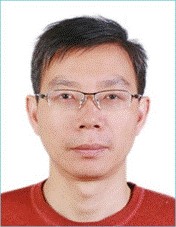 Dr. Weixin Huang holds a Changjiang professorship of Ministry of Education in physical chemistry at University of Science and Technology of China (USTC). He received B.S. degree from USTC in 1996 and Ph. D degree from Dalian Institute of Chemical Physics, Chinese Academy of Sciences in 2001, then worked at University of Texas at Austin as a postdoctoral fellow and at Fritz-Haber-Institut der MPG as an AvH fellow. He joined in USTC as a full professor in 2004. His research interests are surface chemistry and catalysis of solid catalysts with well-defined structures ranging from single crystals to nanocrystals. He won the Humboldt research fellowship of AvH Foundation, the “Young Scientist Prize” of the 13th International Congress on Catalysis, the “Youth Innovation Award” of Chinese Vacuum Society, the “Young Chemist Award” of Chinese Chemical Society, the Distinguished Youth Fund of National Natural Science Foundation, the Changjiang professorship of Ministry of Education of China, the “Chinese Catalysis Youth Award” of Chinese Catalysis Society, the “Young Faculty Achievement Award” of USTC Alumni Foundation, the “Humboldt Research Award” of AvH Foundation. He is an editor of Applied Surface Science, an editorial board member of Catalysis Letters, Topics in Catalysis, Chinese Chemical Letters and Science China Chemistry, and a committee member of Chinese Catalysis Society.
Speaker
-
Prof. Weixin Huang (黄伟新)
Local Time
- Timezone: America/New_York
- Date: 24 Apr 2022
- Time: 10:00 pm - 11:00 pm